
What’s in your Water? Part 2
At the end of Monday’s blog, we brought today’s chemical of interest — lead — and how chloramines can increase lead levels in drinking water if the pipes are old and lined with lead. If you missed Monday’s post, you can read it here. I’ll wait.
According to the EPA, “lead is a toxic metal that is harmful if inhaled or swallowed.” Most lead concerns come from inhaling lead paint, dust, or swallowing lead that has leached into drinking water. If lead is inhaled, or if lead in drinking water is above acceptable limits, it can cause physical, mental, and learning delays in children as well as decreased attention span. In adults, it can cause high blood pressure and kidney problems.
The World Health Organization (WHO) states “too much lead can damage various systems of the body including the nervous and reproductive systems and the kidneys, and it can cause high blood pressure and anemia. Lead accumulates in the bones and lead poisoning may be diagnosed from a blue line around the gums. Lead is especially harmful to the developing brains of fetuses and young children and to pregnant women. Lead interferes with the metabolism of calcium and vitamin D.”
How does lead leach into drinking water? When water sits in leaded pipes for more than six hours, it can leach into the water supply.
What can be done about reducing lead in drinking water? There are filters and water purification systems which can help (more about those later this week).
If lead pipes, fittings, and fixtures are in your home but not the street and the lead content is greater than 15 ppb, it is recommended the following be done:
1. For drinking water and cooking with it, let the water run on cold for 1 – 2 minutes if the water has been off and sitting for more than 6 hours.
If the pipe entering your home from the street does contain lead, and the lead content is greater than 15 ppb, the following is recommended:
1. If the water has been turned off and sitting for more than 6 hours, turn high volume tap water (shower/tub) on cold and let it run for at least 5 minutes.
2. Run the tap in the kitchen on cold for 1 – 2 minutes.
3. Cook with only cold water from the tap, not hot as hot water contains increased lead levels.
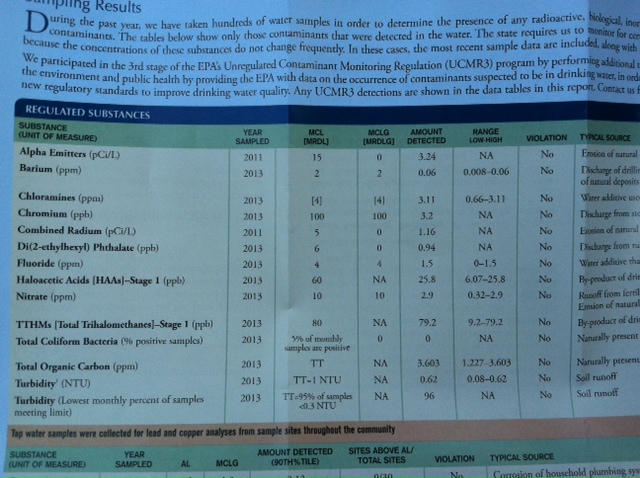
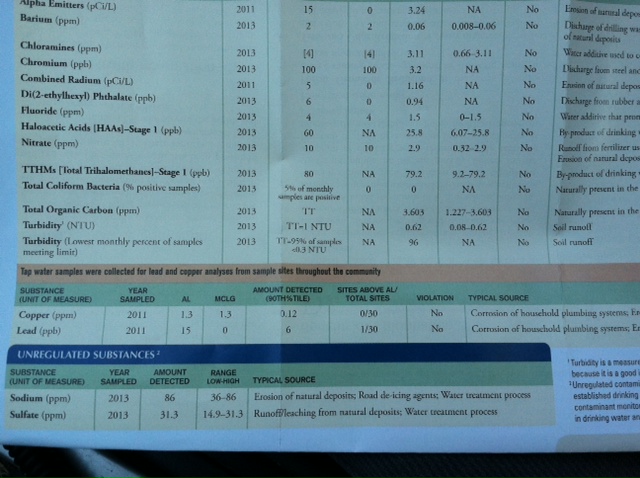
If the lead content is less the 15 ppb, the EPA and CDC state that it is not necessary to take any additional measures to remove lead from the water.
In January 2014, new lead free requirements were enacted based on the Reduction of Lead in Drinking Water Act. Prior to January 2014, lead pipes, fittings, and fixtures could have a lead content of 8%. The new requirements mandate that all new pipes, fittings, and fixtures contain no more than 0.25% lead.
If you are unsure whether or not your community has header pipes containing lead, or if your home contains lead pipes, you can ask your local Water Quality/Resource Division.
__________________________________________________________________
Resources:
EPA
CDC
WHO


 On A Limb Movement & Wellness